 Capital.com
Most retail investors end a year of CFD trading with a loss.
When you trade with Capital.com from Uganda, the practical answer on maximum withdrawal is: there is no fixed upper cap on the amount you can withdraw from a verified account. The real limits come from payment provider rules, verification status, and currency conversion. This page breaks down what those limits actually are.
Capital.com serves Ugandan traders through its global entity and lists Uganda as a supported country for its introducing broker programme. The broker operates under an international regulatory framework rather than a Uganda-specific license. What this means in practice is that your withdrawal limits follow the broker's global rules, not a local Uganda-specific policy.
Withdrawal Limits by Method
The minimum deposit at Capital.com is USD 20, and the broker charges no fees for deposits, withdrawals, or inactive accounts. Maximum withdrawal amounts depend on your chosen payment method rather than a broker-imposed ceiling.
| Payment Method | Typical Processing Time | Common Limits | Fees |
|---|---|---|---|
| Visa/Mastercard | 1-5 business days | Set by card issuer | None from broker |
| Bank transfer | 1-5 business days | Can be higher, may require extra verification | None from broker |
| E-wallets | Usually within 24 hours | Set by wallet provider | None from broker |
Capital.com advertises card, bank transfer, and digital wallet funding, with generally fee-free deposits and withdrawals. The broker covers deposit and withdrawal fees as part of its cost structure, which means the amounts you request arrive without deduction from the broker side.
What Determines Your Maximum
The practical ceiling on any single withdrawal is not a number Capital.com publishes as a fixed limit. Instead, three factors control what you can move out at once.
First, your verification status. A fully verified account with completed KYC checks can withdraw without a per-transaction broker cap. Unverified accounts face withdrawal restrictions until documentation is submitted. The required documents for Uganda traders are typically a National ID (NIN card) or passport, plus proof of address like a recent utility bill or bank statement.
Second, your payment method. Card issuers and e-wallet providers set their own transaction limits. A Mastercard might allow a certain maximum per transaction, while a bank transfer can handle larger sums but takes longer. Mobile money options like MTN Mobile Money and Airtel Money, which are dominant in Uganda, have per-transaction caps set by the mobile money operators.
Third, your base currency. Capital.com supports USD, EUR, GBP, CHF, AED, MXN, and HKD as base currencies. Ugandan traders typically open accounts denominated in USD. Since native UGX accounts are rare at offshore brokers, you face a UGX-USD conversion cost on both deposit and withdrawal. The conversion rate applies at the point of funding and again when you withdraw.
Fees That Affect Your Payout
Capital.com does not charge withdrawal fees, and this is a core part of its cost structure. The broker covers deposit and withdrawal fees, and there are no inactivity fees either.
| Cost Item | Capital.com Policy |
|---|---|
| Withdrawal fee | None |
| Deposit fee | None |
| Inactivity fee | None |
| Currency conversion | UGX-USD spread applies |
| Overnight funding | Applied on leveraged positions |
What you need to watch is the currency conversion. If you deposit via mobile money in UGX, the broker converts to USD at its rate. When you withdraw, the reverse conversion happens. This spread is where costs can accumulate, especially on smaller withdrawals where the conversion cost forms a larger percentage of the amount.
Traders who keep their account in a single base currency and minimise frequent deposits and withdrawals reduce the impact of conversion costs. The headline absence of fees is accurate, but the currency spread is the hidden variable.
Processing Time Expectations
Timing matters when you need funds quickly. Capital.com processes withdrawal requests on business days, and the actual arrival time depends on the payment rail.
- Card withdrawals: 1-5 business days after approval
- Bank transfers: 1-5 business days, sometimes longer for international wires
- E-wallets: usually within 24 hours
- Mobile money: minutes to hours once the broker releases the funds
The broker-side processing is generally fast, with approval typically happening within one business day. The remaining time is the payment provider's settlement period.

Regulatory Reality Check
Retail forex and CFD trading is legal in Uganda, but it is not effectively regulated for retail brokers. The CMA framework exists on paper, yet no broker currently holds a local license. This legal reality means Ugandan residents use offshore brokers regulated by authorities like CySEC, FSCA, or the FCA.
For withdrawals, this regulatory gap has one practical consequence: you have no local ombudsman to escalate disputes. Your protection comes from the broker's own regulatory obligations and client fund segregation rules under its home regulator. Capital.com's group is regulated by multiple authorities, and its withdrawal policies are subject to those standards.
Capital account rules in Uganda are liberalised. There are no exchange controls restricting legitimate trade, and residents can move capital and repatriate profits without prior approval. The caveat is that large cross-border cash amounts must be declared at entry and exit, and banks apply AML and source-of-funds checks on large transfers.
Tax Treatment of Withdrawals
Your maximum withdrawal amount is not the same as your net profit. Uganda Revenue Authority (URA) treats forex and CFD trading profit earned regularly as business income, taxed at progressive resident rates.
| Taxable Income (UGX) | Rate |
|---|---|
| Up to 2,820,000 | 0% |
| 2,820,001–4,020,000 | 10% |
| 4,020,001–4,920,000 | 20% |
| 4,920,001–120,000,000 | 30% |
| Above 120,000,000 | 30% plus 40% surcharge |
Uganda taxes residents on worldwide income, so profits from offshore brokers are reportable. You need a TIN obtained via URA eTax. The withdrawal itself is not taxed, but the trading profit behind it is. Failing to declare trading income is the risk, not the act of withdrawing funds.
Account Type and Withdrawal Rules
Capital.com offers Individual, Pro, and demo account types. Ugandan traders can open an individual live account or apply for a Pro account by contacting support. The minimum deposit is USD 20 by card and USD 50 by wire.
Account type does not have tiered withdrawal limits. A Professional status may have different conditions, but this requires eligibility and direct contact with support.
Verification completeness matters. A fully verified account is the precondition for smooth withdrawals. Any mismatch between your KYC documents and the account registration details will delay the process.
Payment Method Selection
If you plan to withdraw regularly, choose a method with fast processing and acceptable limits. The convenience of mobile money needs to be weighed against the currency conversion cost.
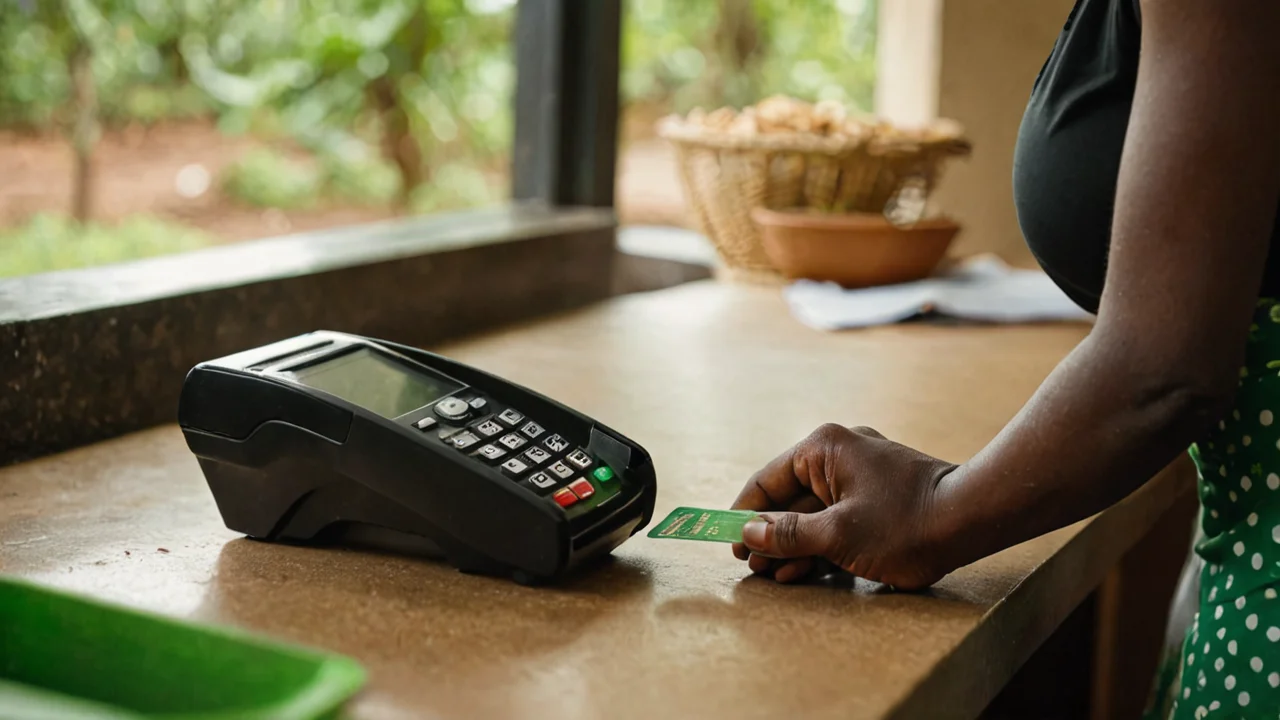
Capital.com offers Visa, Mastercard, bank transfer, and e-wallets as funding options. Mobile money deposits via MTN Mobile Money and Airtel Money are supported, with near-instant processing once confirmed by the operator. Processing typically takes minutes to hours for mobile money, while card and bank transfers require 1-5 business days.
Withdrawal process for new traders
For a new trader, the maximum withdrawal question is less about caps and more about process. Set up a verified account, test the withdrawal flow with a small amount early, and understand your payment method limits before you accumulate significant funds.
For an experienced trader, the decisive factor is the total cost of moving money. Capital.com's zero-fee policy is genuinely competitive, but the UGX conversion spread and mobile money caps shape the practical maximum. The broker suits traders who hold balances in USD and withdraw via methods with clear limits. It is less optimal for those who need frequent small UGX withdrawals, where conversion costs erode the advantage. Compare the effective cost per withdrawal against the broker's fee structure, and decide based on your actual payment pattern.
Questions
What leverage is available?
Leverage: Global default up to 1:300 - the broker’s default offshore offering is used where no country-specific rule is stated.
What can I trade?
Instruments: 5,500+ CFDs - Capital.com advertises over 5,500 CFD assets across shares, indices, forex and commodities.
Is Capital.com regulated in UG?
Regulated offshore CFD broker - Capital.com is regulated across multiple jurisdictions, and for Uganda the applicable service appears to be under its offshore regulated entity rather than a Uganda-specific license. Check the entity on the regulator's register before depositing.